
Automatización · RPA · Gestión de procesos · Transformación digital
Automating a poorly defined process doesn't fix it — it breaks it faster
Automating a process that was never standardized doesn't bring order to chaos: it reproduces it at machine speed. The thesis is simple and demands prior discipline: without clear rules and documented exceptions, automation multiplies error before it eliminates it.
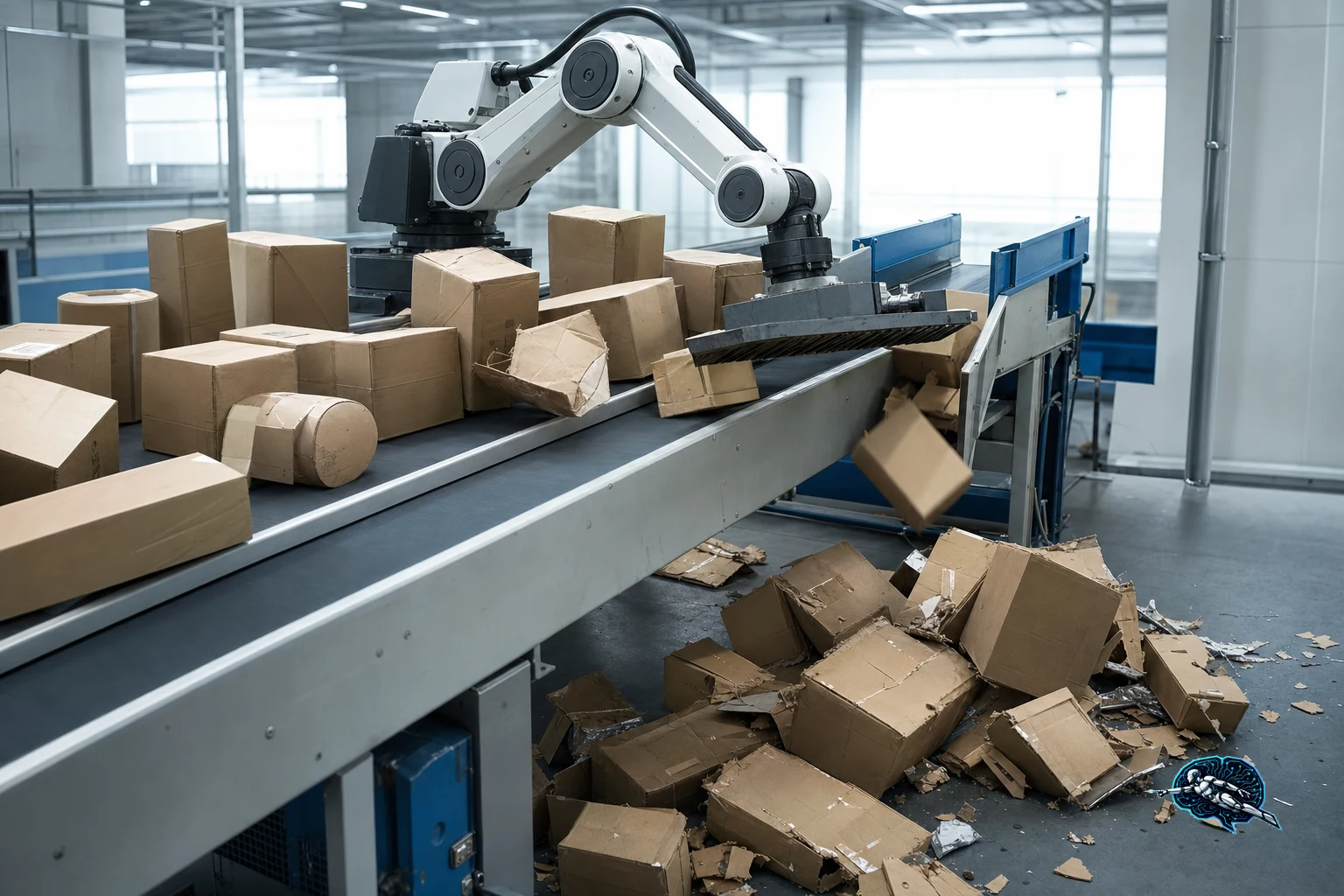
There's a promise that keeps repeating in efficiency committees everywhere: "let's automate this and the process will finally get organized." It's exactly backwards. A process that no one has standardized, with exceptions that only the usual team knows how to resolve by hand, doesn't get fixed by putting a robot on top of it. It breaks faster, because now the chaos runs at the speed of a machine instead of the speed of a person who, at least, hesitated before executing.
The temptation is understandable. Automation looks like a technological solution to a management problem, and technological solutions can be purchased, installed, and displayed on a progress dashboard. But the problem is almost never technological. It's that the process never had explicit rules, and that ambiguity, which a human compensated for with judgment, an automated system does not compensate for: it executes it without asking.
The criterion that decides whether a process is ready
Before asking which tool to use, there's a more basic question that almost no one asks with rigor: is this process mature? A process's maturity isn't a feeling, it's something verifiable. A mature process has specified tasks, and is predictable, stable, and measurable. If no one can describe in writing, without ambiguity, what happens at each step and why, that process isn't ready for a robot — it's ready for a redesign meeting.
There's a second criterion, equally concrete, that tends to get ignored: the exception rate. A process that's a candidate for automation should show little or no deviation from the defined flow. If in practice the process gets resolved "sometimes this way, sometimes that way" depending on who's handling it, on the customer, on the month, or on which legacy system happens to be down that week, automating it isn't optimization — it's fixing the current chaos as official behavior, and letting it run without supervision.
This isn't a philosophical objection to automation. It's an entry filter. Before asking which platform to use, you need to answer whether the process already has documented rules, and whether those rules reasonably cover the real exceptions, not the ideal exceptions that appear in the flowchart nobody updates.
Why the initial savings eat up the repair budget
The pattern repeats with predictable logic. A business case gets built around an attractive savings estimate. The most visible part of the process gets automated, typically with robotic automation tools that replicate what a person did in an interface. And that's where the erosion begins: the estimate of value captured in the first year keeps shrinking, not because the technology fails, but because the underlying process had more variations, more "off-script" steps, and more uneven input data quality than the requirements document ever acknowledged.
When that happens, the cost doesn't disappear: it shifts. Someone has to review what the robot executed incorrectly, rebuild the cases that fell outside the standard flow, and explain to the teams absorbing the change why the work routines that already functioned are now disrupted. That repair work, added to the friction of staff who spent hours delivering requirements without ever getting clarity on how the pieces would work together, usually exceeds the savings that motivated the project in the first place.
The operational lesson is direct: automating without first resolving the process design isn't a risky bet with good return potential. It's a guaranteed way to pay twice for the same problem: once in the design work that was skipped, and again in the cleanup that follows.
Redesign first, automate afterward
The correct sequence is not negotiable, even if it's inconvenient for those who want fast results: first, apply a process reengineering methodology that forces explicit decisions about data input, the boundaries of each task, and exception handling. Only after that does it make sense to evaluate which part of the process is worth automating and with what tool.
In practice, this means resisting the pressure to automate "what's already there" just because it's available and visible. It means asking, task by task, whether there's a written rule covering the normal case and a written rule covering the most frequent exceptions. If the answer is "so-and-so handles that depending on the situation," that step isn't ready for a robot: it's ready for someone to sit down and define the criteria so-and-so uses in their head, and turn it into a rule anyone can follow, human or machine.
Nor should you fall into the opposite extreme: using the lack of perfect standardization as a permanent excuse never to automate. The goal isn't to demand a flawless process down to every detail, but to demand that the part being automated has sufficient maturity and a manageable exception rate. Automating the stable eighty percent of a process and leaving the ambiguous twenty percent in human hands is a reasonable decision. Automating one hundred percent while assuming the ambiguity will resolve itself is not.
The review worth doing this week
Take the process your organization is about to automate, or the one it already automated that keeps generating manual correction work. Ask someone to describe in writing, without using the word "depends," how the most common case gets resolved and how the three most frequent exceptions get resolved. If that description doesn't exist, or exists only in the memory of one key person, you don't have a process ready for automation: you have a process that first needs a design decision.
The question worth putting on the agenda of the next committee isn't "which automation tool should we use." It's this: what percentage of this process's exceptions is documented as a rule, and what percentage still lives solely in the judgment of someone who could get sick, change roles, or leave the company one day? That figure, even if approximate, says more about the project's real risk than any savings projection in the proposal.
Newsletter
Get our new articles
We'll let you know when we publish practical analysis on data, automation, and Artificial Intelligence.
Sources
- Stop Automating Your Broken Processes. Reimagine Them
- Before Automating Your Company’s Processes, Find Ways to Improve Them
- Reengineering Work: Don’t Automate, Obliterate
- Why do so many RPA projects fail? | Gartner Peer Community
- A framework to evaluate the viability of robotic process automation for business process activities
- Towards Discovering Erratic Behavior in Robotic Process Automation with Statistical Process Control